
Theology

A Systematic Summary of Bible Truth
John MacArthur, Richard Mayhue
Long-Awaited Systematic Theology by Well-Known Pastor, Author, and President of the Master's Seminary Doctrine isn't just for theologians—it's important for every Christian because it shows us who God is and how we should live. Systematizing the robust theology that has undergirded John MacArthur's well-known preaching ministry for decades, this overview of basic Christian doctrine covers topics such as God the Father, Jesus Christ, the Holy Spirit, the Bible, salvation, and more. Comprehensive in scope yet written to be accessible to the average reader—with non-technical vocabulary, minimal footnotes, and a helpful bibliography—this volume offers Christians a solid foundation for what they believe and why.
Bibliology
Why the Bible Is Knowable, Necessary, and Enough, and What That Means for You and Me
Kevin DeYoung
Can we trust the Bible completely? Is it sufficient for our complicated lives? Can we really know what it teaches? With his characteristic wit and clarity, award-winning author Kevin DeYoung has written an accessible introduction to the Bible that answers important questions raised by Christians and non-Christians. This book will help you understand what the Bible says about itself and the key characteristics that contribute to its lasting significance. Avoiding technical jargon, this winsome volume will encourage you to read and believe the Bible—confident that it truly is God’s word.
The King James Only Controversy
Can You Trust Modern Translations?
James R. White
"A thoroughly researched discussion of the development of Bible translations ancient and modern, including key differences between versions such as the New International, New American Standard Bible, and the Authorized Version of 1611"--Provided by publisher.
A Plea for Realism
D. A. Carson
D. A. Carson addresses laypeople and pastors with a concise explanation of the science of textual criticism and refutes the proposition that the King James Version is superior to contemporary translations. The book provides a readable introduction to two things: biblical textual criticism and some of the principles upon which translations are made.
Christology
A Christological Title Often Overlooked, Sometimes Misunderstood, and Currently Disputed
D. A. Carson
Although it is a foundational confession for all Christians, much of the theological significance of Jesus's identity as "the Son of God" is often overlooked or misunderstood. Moreover, this Christological concept stands at the center of today's Bible translation debates and increased ministry efforts to Muslims. New Testament scholar D. A. Carson sheds light on this important issue with his usual exegetical clarity and theological insight, first by broadly surveying Jesus's biblical name as "the Son of God, and then by focusing on two key texts that speak of Christ's sonship. The book concludes with the implications of Jesus's divine sonship for how modern Christians think and speak about Christ, especially in relation to Bible translation and missionary engagement with Muslims across the globe.
The Case for the Deity of Christ
J. Ed Komoszewski, Robert M. Bowman
Putting Jesus in His Place is designed to introduce Christians to the wealth of biblical teaching on the deity of Christ and give them the confidence to share the truth about Jesus with others.
Michael Reeves
Michael Reeves opens to readers the glory and wonder of Christ, offering a bigger and more exciting picture than many have imagined. Jesus didn?t just bring us the good news. He is the good news. Reeves helps us celebrate who Christ is, his work on earth, his death and resurrection, his anticipated return and how we share in his life.
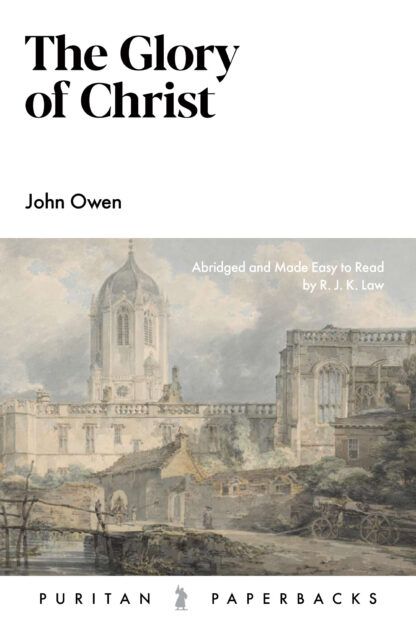
John Owen
In The Glory of Christ, here abridged and made easy to read, we have the great Puritan pastor and theologian John Owen at his richest and most mature. Here he writes about Jesus Christ, the heart of the gospel. Owen himself tells us that the substance of the work began in his own private meditation and study and only later was shared with his congregation. Here, then, is a master theologian writing about the things, or better, the person, nearest to his heart. The work itself was composed almost at the end of Owen’s life and first published in 1684, the year after his death. Indeed, the material in chapters fifteen to seventeen of this abridgement appeared for the first time in the second edition of 1696, having been found among Owen’s papers only after his death but clearly intended as the closing section of the work.
Theological Reflections on the Humanity of Christ
Bruce A. Ware
Liberal attacks on the doctrine of the divinity of Christ have led evangelicals to rightly affirm the centrality of Jesus’s divine nature for his person and work. At times, however, this defense of orthodoxy has led some to neglect Christ’s full humanity. To counteract this oversight, theologian Bruce Ware takes readers back to the biblical text, where we meet a profoundly human Jesus who struggled with many of the same difficulties and limitations we face today. Like us, he grew in faith and wisdom, tested by every temptation common to man. And like us, he too received power for godliness through the Holy Spirit, and thus serves not only as the divine Lord to be worshiped, but also the supreme Human to be followed.
Doctrine of God
An Introduction to the Christian Faith
Michael Reeves
In this engaging book, Michael Reeves presents an introduction to Christianity that is rooted in the triune God. Drawing from church history down to the present, this resource, now available in the IVP Signature Collection, provides a rich, enjoyable portrait of basic Christian beliefs, opening up the life-changing truths of our faith.

The Doctrine of God
John S. Feinberg
Many contemporary theologians claim that the classical picture of God painted by Augustine and Aquinas is both outmoded and unbiblical. But rather than abandoning the traditional view completely, John Feinberg seeks a reconstructed model—one that reflects the ongoing advances in human understanding of God's revelation while recognizing the unchanging nature of God and His Word. Feinberg begins by exploring the contemporary concepts of God, particularly the openness and process views, and then studies God's being, nature, and acts—all to articulate a mediating understanding of God not just as the King, but the King who cares! Part of the Foundations of Evangelical Theology series.
Contemporary Perspectives on Election, Foreknowledge, and Grace
Bruce A. Ware, Thomas R. Schreiner
The relationship between divine sovereignty and the human will is a topic of perennial theological dispute and one that is gaining increased attention among contemporary evangelicals. In Still Sovereign, thirteen scholars write to defend the classical view of God's sovereignty. According to the editors, "Ours is a culture in which the tendency is to exalt what is human and diminish what is divine. Even in evangelical circles, we find increasingly attractive a view of God in which God is one of us, as it were, a partner in the unfolding drama of life. . . . In contrast, the vision of God affirmed in these pages is of one who reigns supreme over all, whose purposes are accomplished without fail, and who directs the course of human affairs, including the central drama of saving a people for the honor of his name, all with perfect holiness and matchless grace." The fourteen chapters of Still Sovereign (originally part of the two-volume, The Grace of God, the Bondage of the Will) are divided into three parts. Part 1 offers fresh exegesis of the biblical texts that bear most directly on the doctrines of election, foreknowledge, and perseverance of the saints. Part 2 explores theological and philosophical issues related to effectual calling, prevenient grace, assurance of salvation, and the nature of God's love. The final section applies the doctrines of election and divine sovereignty to Christian living, prayers, evangelism, and preaching.
The Existence and Attributes of God
Updated and Unabridged
Stephen Charnock
This two-volume set, edited by Mark Jones, contains an updated and unabridged edition of Charnock's work, Discourses upon the Existence and Attributes of God, written to instruct and encourage Christians through exegetical commentary and pastoral application.
R. C. Sproul
Central to God’s character is the quality of holiness. Yet, even so, most people are hard-pressed to define what God’s holiness precisely is. Many preachers today avoid the topic altogether because people today don’t quite know what to do with words like “awe” or “fear.” R. C. Sproul, in this classic work, puts the holiness of God in its proper and central place in the Christian life. He paints an awe-inspiring vision of God that encourages Christian to become holy just as God is holy. Once you encounter the holiness of God, your life will never be the same.
Ecclesiology
Sign of the New Covenant in Christ
Thomas R. Schreiner
Is believer’s baptism the clear teaching of the New Testament Scriptures? What are the historical and theological challenges to believer’s baptism? What are the practical applications for believer’s baptism today? Volume two in the NEW AMERICAN COMMENTARY STUDIES IN BIBLE & THEOLOGY (NACSBT) series for pastors, advanced Bible students, and other deeply committed laypersons addresses these compelling questions. Indeed, Believer’s Baptism begins with the belief that believer’s baptism (as opposed to infant baptism or other faith proclaiming methods) is the clear teaching of the New Testament. Along the way, the argument is supported by written contributions from Andreas Kostenberger, Robert Stein, Thomas Schreiner, Stephen Wellum, Steve McKinion, Jonathan Rainbow, Shawn Wright, and Mark Dever. Users will find this an excellent extension of the long-respected NEW AMERICAN COMMENTARY.
A Biblical, Historical and Theological Investigation
D. A. Carson
A series of authors assert the premise that Sunday is Òa new day of worship that was chosen to commemorate the unique, salvation-historical event of the death and resurrection of Christ, rather than merely being another day for celebrating the Sabbath.Ó
Has the Church Replaced Israel?
A Theological Evaluation
Michael J. Vlach
A theological evaluation of replacement theology, the doctrine that suggests the church supersedes the nation of Israel in God's plan revealed in the Old Testament.
Eschatology
What Is It Like? What Will We Do? ... And 11 Other Things You've Wondered About
Paul P. Enns
Biblical, warm, personal, and devotional.
Modern Scholarship Reinvents Eternal Punishment
Christopher W. Morgan
This book provides a biblical, systematic, and practical theology of hell. The contributors to this volume unite in affirming the historic Christian doctrine regarding the final destiny of the unsaved: They will suffer everlasting conscious punishment away from the joyous presence of God.
The Truth about Heaven, Angels, and Eternal Life (Second Edition)
John MacArthur
This in-depth look at what the Bible has to say about heaven, angels, and the afterlife gives Christians an encouraging glimpse of the home that awaits them.
Biblical Teaching on the Doctrines of Heaven and Hell
Edward Donnelly
A moving exposition, marked by biblical realism and pastoral warmth, of the solemn reality of hell and the matchless glory of heaven, by the author of Peter: Eyewitness of His Majesty.
Harmartiology
The Doctrine of Sin
Thomas H. McCall
Without a proper understanding of sin, there can never be a proper understanding of the gospel. Sin is opposed both to God's will and to nature, leaving us in need of God's grace and redemption. This comprehensive exploration of the doctrine of sin looks at what the Bible teaches about sin's origin, nature, and consequences, engaging with historical and contemporary movements. Dealing with difficult issues such as original sin, angelic sin, corporate sin, greater and lesser sins, and more, this book ends with a discussion on divine grace, which is the only hope for the problem of sin.
Illuminating the Riddle
Henri Blocher
Henri Blocher offers a robust response in this philosophically sophisticated treatment of the biblical evidence for original sin. Interacting with the best theological thinking on the subject, he shows that while the nature of original sin is a mystery—even a riddle—only belief in it makes sense of evil and wrongdoing. After a general survey of the biblical evidence, he moves on to discuss the two key texts. First, he considers the relation of the Eden story of Genesis 2 and 3 to modern scientific, literary, and theological thinking. Then, he offers a new and groundbreaking interpretation of Romans 5, where Paul discusses Christ and Adam. From this exegetical foundation, he goes on to show how the doctrine of original sin makes sense of the paradoxes of human existence. In the final chapter, he discusses the intellectual difficulties that some feel remain with the doctrine itself.
Pneumatology
John Owen
Owen on the Holy Spirit, as this work has been known to generations of Christians, was written by the greatest theologian of the Puritan era. It is, without question, one of the truly great Christian books.
Soteriology
The Evangelical Doctrine of Justification
R. C. Sproul
A brilliant work on one of the central doctrines of the Reformation: sola fide or justification by faith alone. Sproul presents one of the finest articulations on the subject with clarity and simplicity. It is both biblical and historical in its explanatory content. Highly recommended.
Tracing the Heart of the Gospel From Christ to the Reformation
Nathan Busenitz
Where was the gospel before the Reformation? Contemporary evangelicals often struggle to answer that question. As a result, many Roman Catholics are quick to allege that the Reformation understanding of the gospel simply did not exist before the 1500s. They assert that key Reformation doctrines, like sola fide, were nonexistent in the first fifteen centuries of church history. Rather, they were invented by Martin Luther, John Calvin, and others. That is a serious charge, and one that evangelicals must be ready to answer. If an evangelical understanding of the gospel is only 500 years old, we are in major trouble. However, if it can be demonstrated that Reformers were not inventing something new, but instead were recovering something old, then key tenets of the Protestant faith are greatly affirmed. Hence, the need for this book. After reading Long Before Luther, readers will: Possess a greater understanding of church history and the role it plays in the church today. Have a deeper appreciation for the hard-won victories of the Reformation. Be equipped to dialogue with Catholic friends about the presence of Reformed doctrines throughout church history. Feel renewed gratefulness for the unearned nature of grace and the power of the gospel.
Its Meaning and Significance
Leon Morris
Leon Morris examines the rich variety of New Testament terms used to describe the significance of Christ's death and resurrection.
John Stott
This is one of the outstanding works on the subject of Christ's cross and its meaning. It is supremely a book about the gospel and the glory of Christ. It is scholarly yet accessible, not novel yet profound. Rightly considered by many a masterpiece. Highly recommended.
How the Grace of God Amazes Me
Sinclair B. Ferguson
Are you truly amazed by God's grace? Or have you grown accustomed to it? These probing questions and more help us know if we're tasting, savoring, and delighting in God's amazing grace. In this book, Dr. Sinclair Ferguson offers those willing to delver into God's Word a deeper astonishment at being saved by grace alone.